14 min readUpdated: October 2026Author: Happy End editors
Anatomy of pleasure
Everything you need to know about genitals and what they like
How the clitoris is built: the glans is only the tip, and the legs extend deep inside. The anatomy of the vulva, penis and anus, and the role of hormones and erectile tissue in orgasm.
Knowledge is power, especially when it comes to your body. Understanding what you enjoy and where you feel the most pleasure not only strengthens your confidence, but also improves the quality of your sex life.
Interest in your partner's pleasure also plays a big role. It makes you a more attentive and sensitive lover. One of the most exciting steps toward sexual happiness is getting to know the anatomy of pleasure. You do not need to memorize scientific terms for every zone of your body in order to enjoy yourself. But a little "biology lesson" can open your eyes to a great deal and make your sensations even brighter.
Unfortunately, far from all of us have received good sex education. We are rarely told about consent, personal boundaries and pleasure. That is why many people start their journey blindly, trying things and making mistakes. We move forward guided by a natural desire for joy, but we do not always understand how to succeed.
Exploring your own body and your partner's can be a real discovery. It is a pleasant and meaningful experience that helps you understand yourself and each other better. But it is often held back by attitudes we absorbed in childhood. Society and family impose shame about being curious about your own body, which takes away your freedom to explore your sexuality.
It's time to drop these barriers and discover new facets of pleasure. Let yourself get to know your body and what it can do, because that's the first step to real happiness.
Our bodies are made for pleasure
Sexual pleasure comes from several key elements: hormones, nerve endings, erectile tissue and our own "scripts". These scripts are shaped by past experiences, the messages about sex and sexuality we received, and our beliefs about ourselves. That is why each person's response to touch and stimulation is unique. But understanding how the body works in this process is fairly simple.
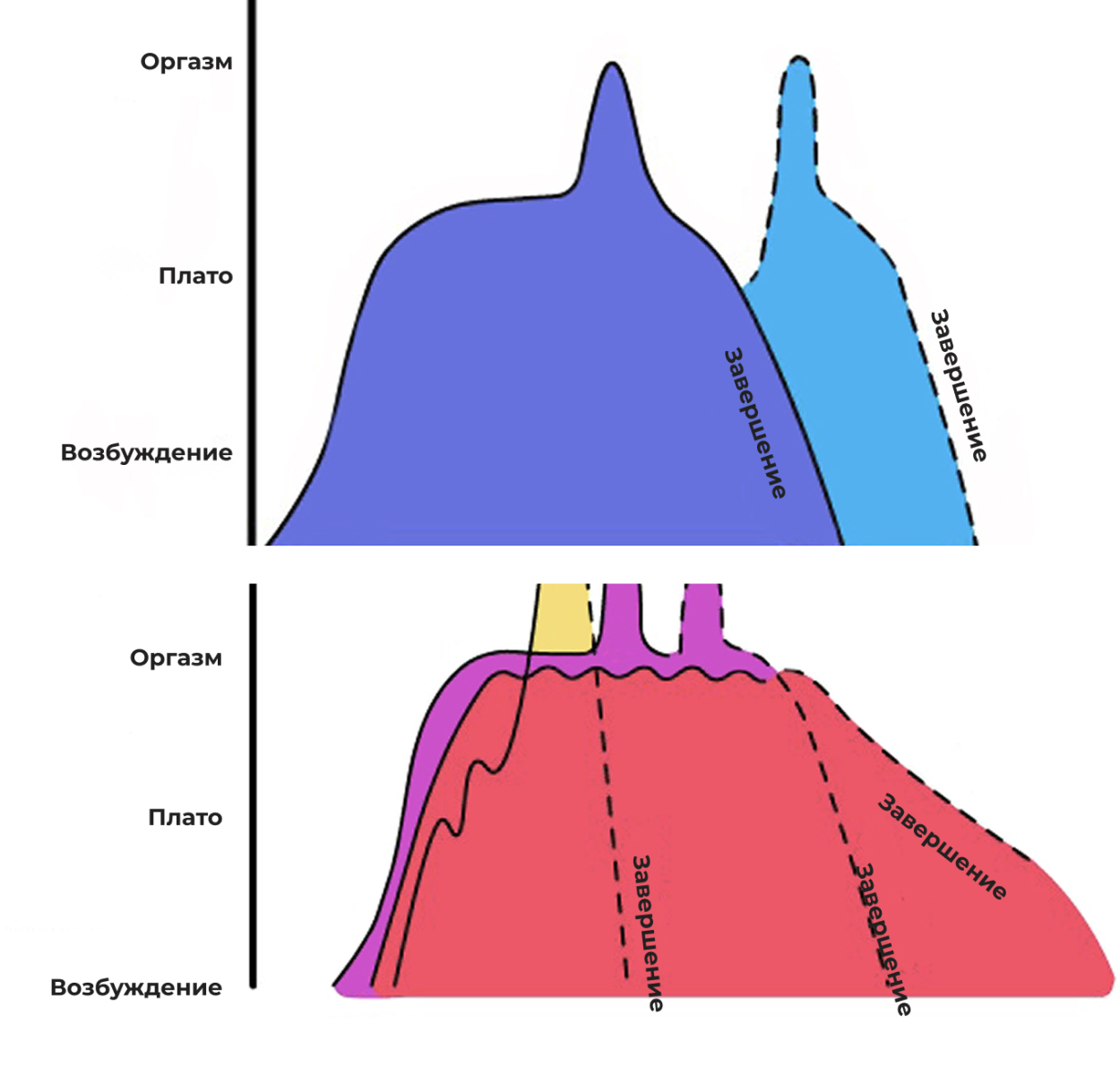
Orgasm is the body's natural response to stimulation, and arousal is the preparatory stage. During arousal, blood rushes to the genitals, increasing the sensitivity of the nerve endings. What makes our body unique is that arousal in one spot can spread throughout the whole body.
There are no strict rules about what should turn you on. Kisses on the neck, pleasant sounds, visual images or vibration on the nipples can all become part of your arousal. Your body is your guide to pleasure.
The role of hormones in arousal and sex
Hormones play a key role in how we get aroused and enjoy intimacy. They help us feel stimulation, relaxation, joy and even connection with a partner.
Testosterone:this hormone is more pronounced in people assigned male at birth (AMAB). Testosterone boosts sex drive and rapid arousal, which grows in direct proportion to it.
Estrogen and progesterone:in people assigned female at birth (AFAB), these hormones are present in greater amounts than testosterone. Their levels can change during the menstrual cycle or pregnancy. Arousal builds more slowly at high levels of estrogen and progesterone and can change over time.
Norepinephrine: ethat hormone and neurotransmitter intensifies sexual sensations, making them more intense.
Prolactin: is produced during orgasm and is responsible for the feeling of relaxation after intimacy.
Dopamine: the main hormone of the reward system. It is released during moments of pleasure, such as orgasm, and forms positive associations with the experience.
Oxytocin: known as the "love hormone". It strengthens attachment, promotes muscle contractions during orgasm and deepens the sense of connection with a partner.
The role of erectile tissue in arousal and orgasm
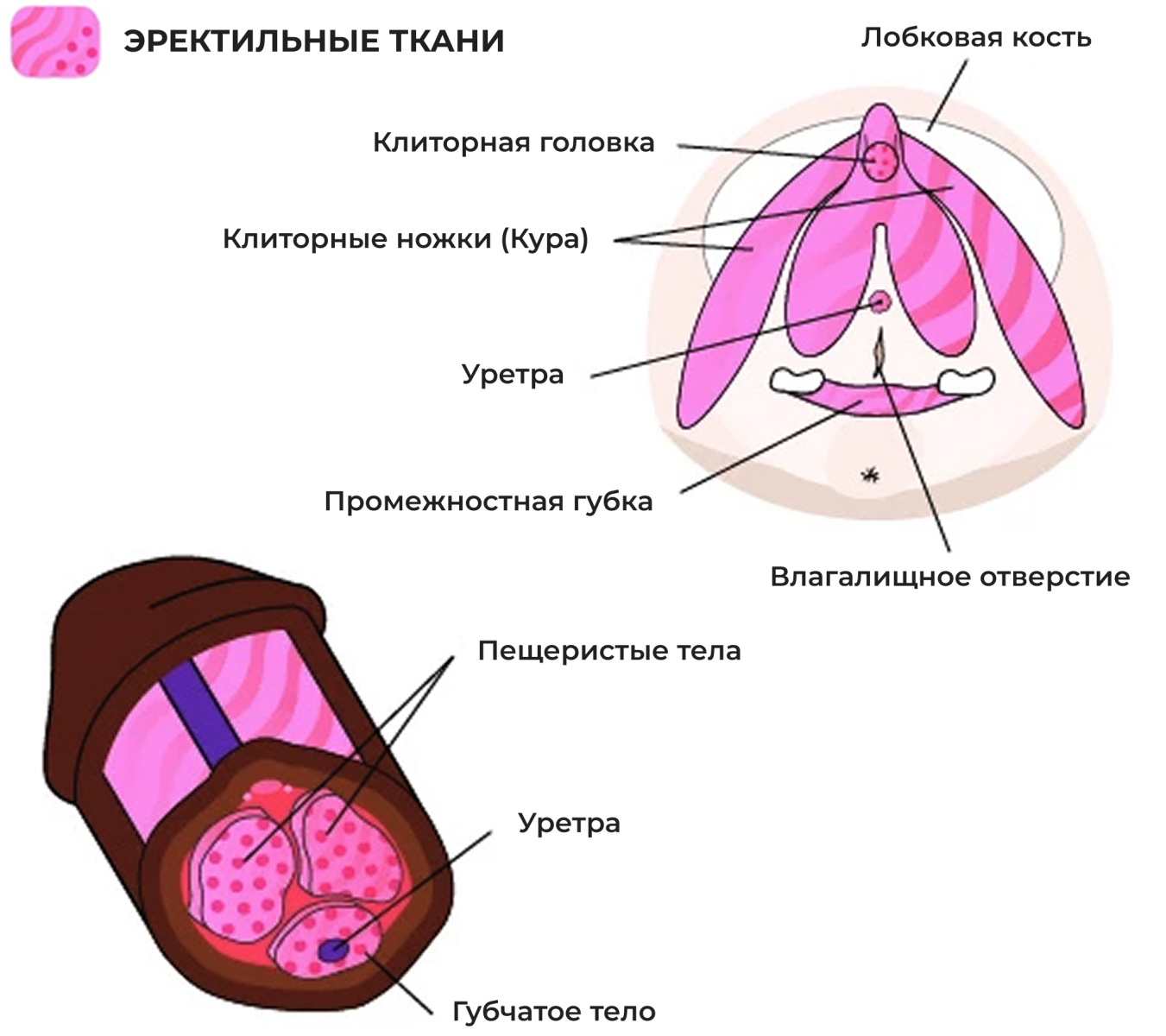
Erectile tissue— a unique part of our body that fills with blood during arousal, enlarges and becomes firmer. It can be found on the penis, clitoris, perineum and nipples. The blood flow to these areas makes them more sensitive and ready for stimulation.
Erectile tissue in the penis: the penis contains a spongy body in the center and two corpora cavernosa on either side. During arousal, blood fills the corpora cavernosa, causing enlargement and erection.
Erectile tissue in the clitoris: The clitoris also consists of erectile tissue that starts at the glans and extends to the pubic bone. During arousal, blood fills this area, increasing its size and sensitivity.
Erectile tissue in nipples: nipples contain the same tissue that responds to arousal similarly to the genitals.
When erectile tissue fills with blood, it becomes more sensitive to touch. This explains why light touches can sometimes be unpleasant before arousal but become incredibly pleasurable once you are "warmed up".
Give yourself time to fully reach an aroused state so that your body is ready for maximum pleasure. The better you learn to understand and explore your erogenous zones, the richer and brighter your experience will be.
Sensitive nerve endings: the secret to your pleasure
Our body is a complex network of nerves that provide sensitivity and pleasure in the genital area. These nerves affect how we respond to touch, massage, vibration and other kinds of stimulation.
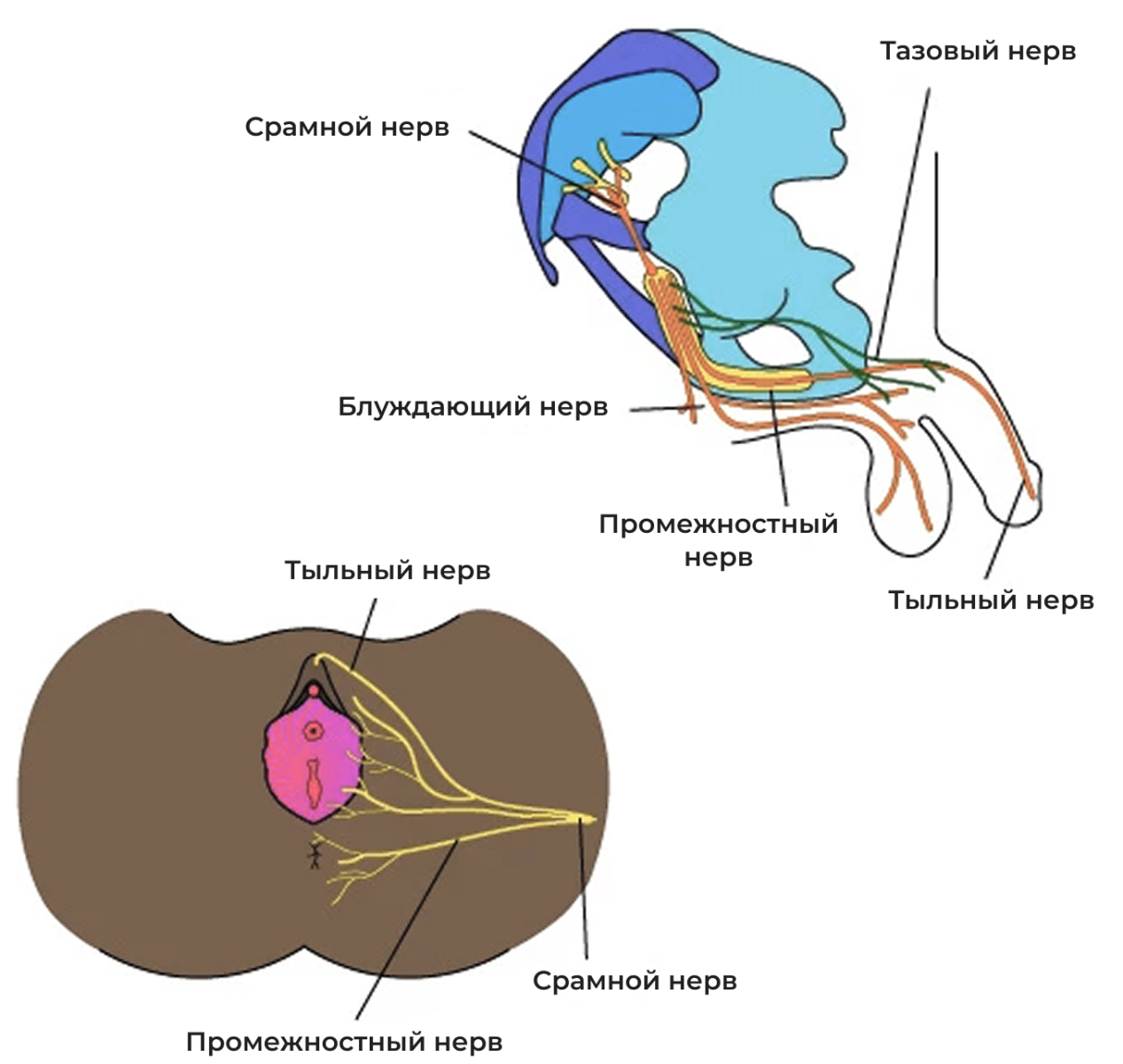
Pelvic Nerve:this nerve controls sensation in the pelvic area and the work of the pelvic floor muscles, and it is responsible for the movements that occur during arousal and orgasm. Its branches run through the vaginal canal, the base of the penis and even the rectum.
Pudendal Nerve:
the main nerve responsible for the sensitivity of the genitals. It starts at the base of the spine, passes through the perineum and ends at the head of the penis or the clitoris.
Vagus nerve: It connects the brain with the pelvic area and is responsible for deep, "whole-body" sensations during stimulation of zones such as the G-spot or the prostate.
Erogenous zones are filled with spongy tissue that hides a huge number of nerve endings. When this tissue fills with blood during arousal, it becomes even more sensitive. Every touch, from gentle massage to rhythmic movement, activates the pelvic floor muscles, which contract and relax, preparing the body for orgasm.
Give yourself time to explore and find out what brings you the most pleasure. Understanding your body is the path to incredible sensations!
Vulva anatomy: what you should know
The vulva is the term for the external part of the genitals in people assigned female at birth (AFAB). Many people confuse it with the vagina, but the vagina is actually the internal part of the genitals, that is, the vaginal canal. This confusion is the result of stereotypes that treat penetrative sex as the main thing. But the vulva is much more than just an "entrance".
It is made up of many sensitive and amazing parts.
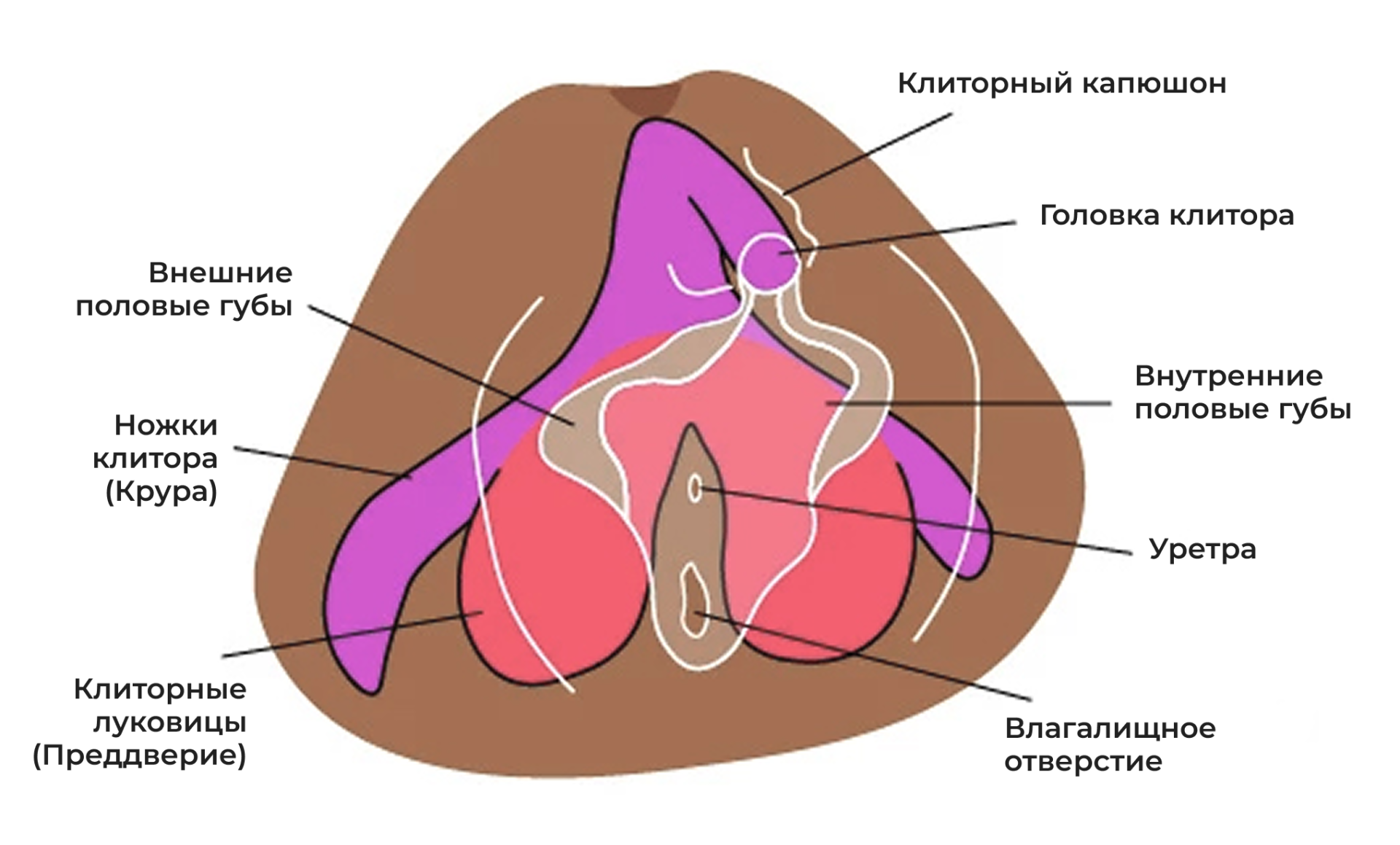
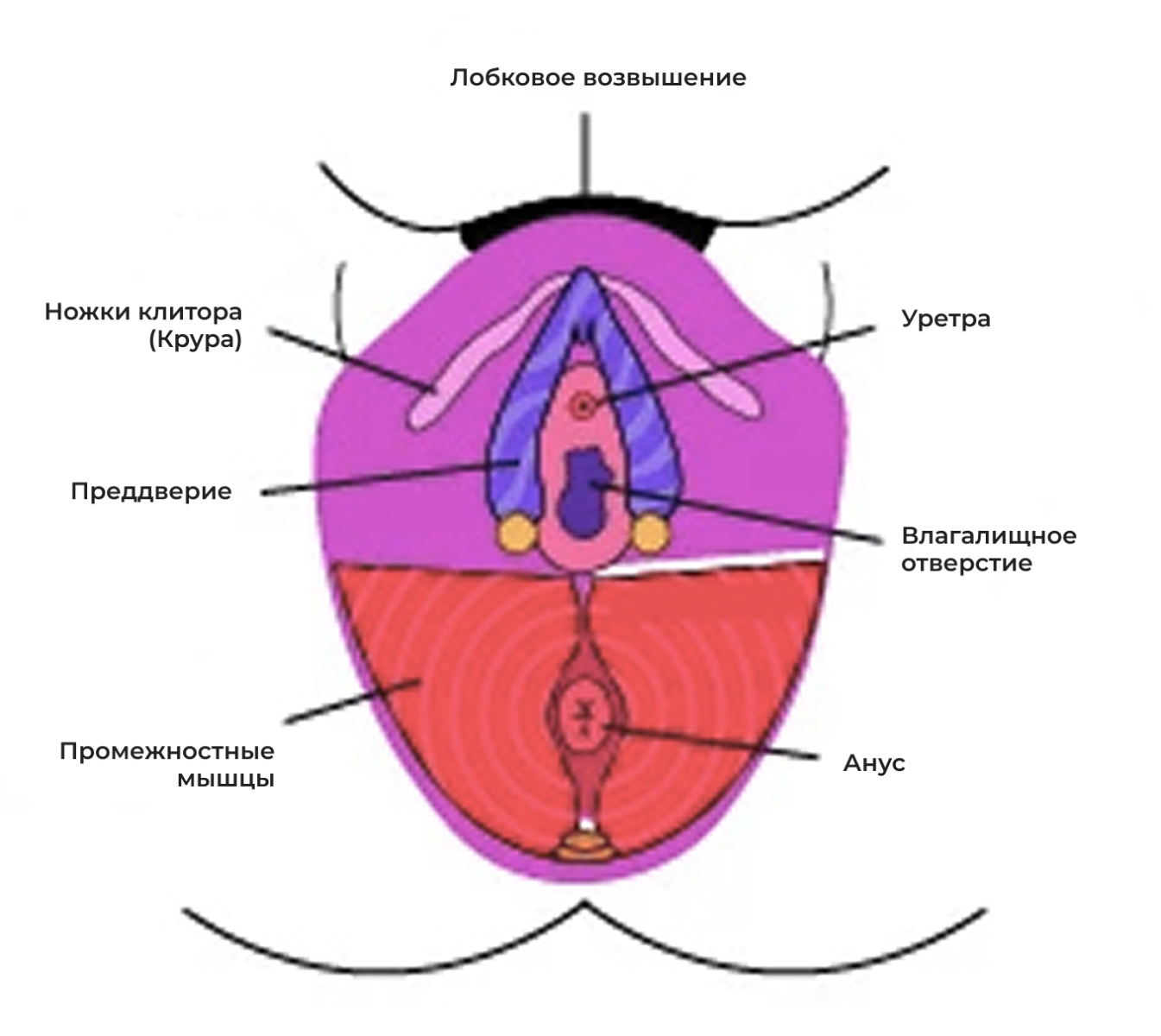
Clitoris— is the true star of the vulva. It is a complex and highly sensitive organ that includes both external and internal parts. What you see is the glans of the clitoris, but that is just the "tip of the iceberg".
Clitoral structure:
The head is covered by the labia and is the most sensitive part of the body. It contains thousands of nerve endings.
The clitoral legs run along the sides of the vulva.
Vestibular bulbs surround the vagina and enhance pleasure during penetration.
The clitoris plays a key role in almost every kind of sexual stimulation. It is "involved" both in vaginal penetration (through the walls of the vagina) and in massage of the vulva, friction or oral stimulation. And yes, the glans of the clitoris is most often the main "target" for vibrators, fingers and tongues, because it is made to give pleasure!
Remember, knowing your anatomy is the first step to vivid sensations and complete comfort.
Labia majora and minora: what makes them unique
The labia are skin folds surrounding the vaginal opening. They come in two types:
Labia majora — outer folds covered with hair. They protect the inner parts of the vulva.
Labia minora — inner hairless folds surrounding the vaginal opening and the vestibular glands.
Labia are often asymmetrical, which is completely normal. They're made of tissue rich in nerve endings and are very sensitive to touch, vibration and massage.
What else is part of vulva anatomy:
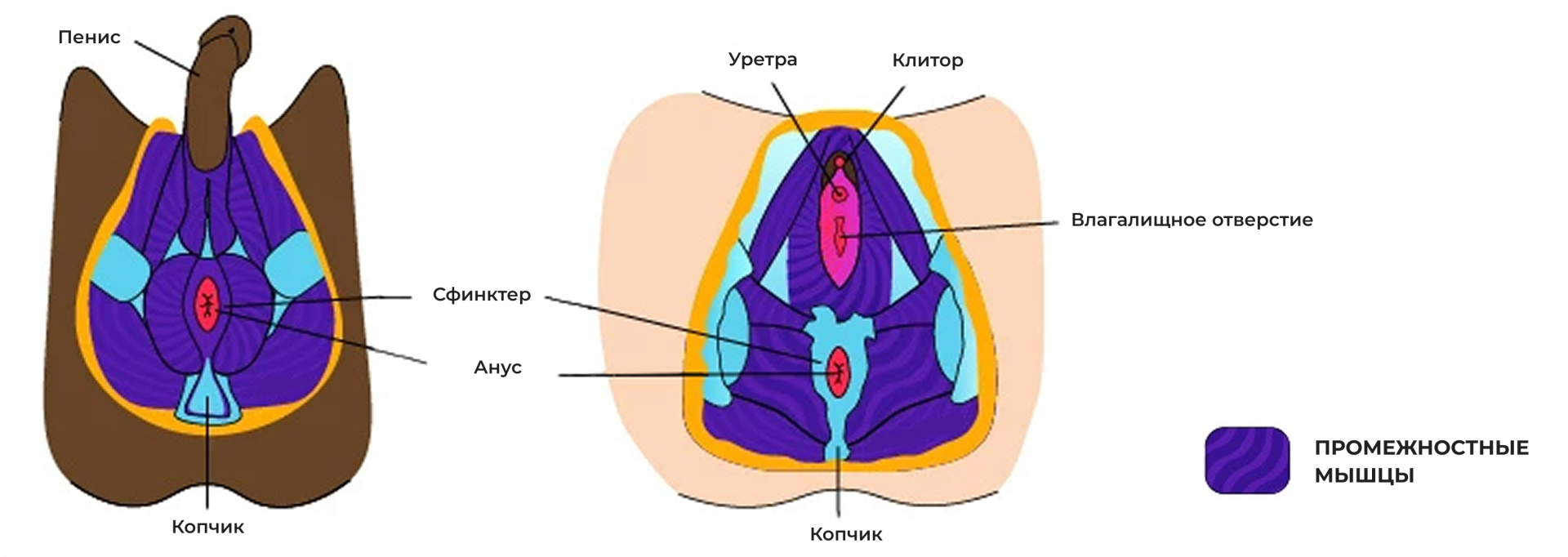
Perineumthe area between the vulva and the anus. It is made of erectile tissue that fills with blood during arousal. Massage or vibration of the perineum can enhance pleasure and in some cases even lead to orgasm.
Mons pubisa soft fatty pad above the pubic bone. It responds to deep massage and friction. Interestingly, even the internal part of the clitoris and penis can be stimulated through this area.
Urethra and Skene's glands:
Urethra — the opening from which urine exits, located above the vaginal entrance.
Located on either side of the urethra are Skene's glands, which release fluid during orgasm. This process is known as squirting.
Vaginal opening is the most sensitive part of the vagina, where about 90% of the nerve endings are concentrated. That's why light touch or massage in this area can cause intense sensations.
Vestibule — are two raised structures that surround the entrance and are connected to the internal parts of the clitoris. These areas can be stimulated by massaging them between the labia or on both sides of the vaginal opening.
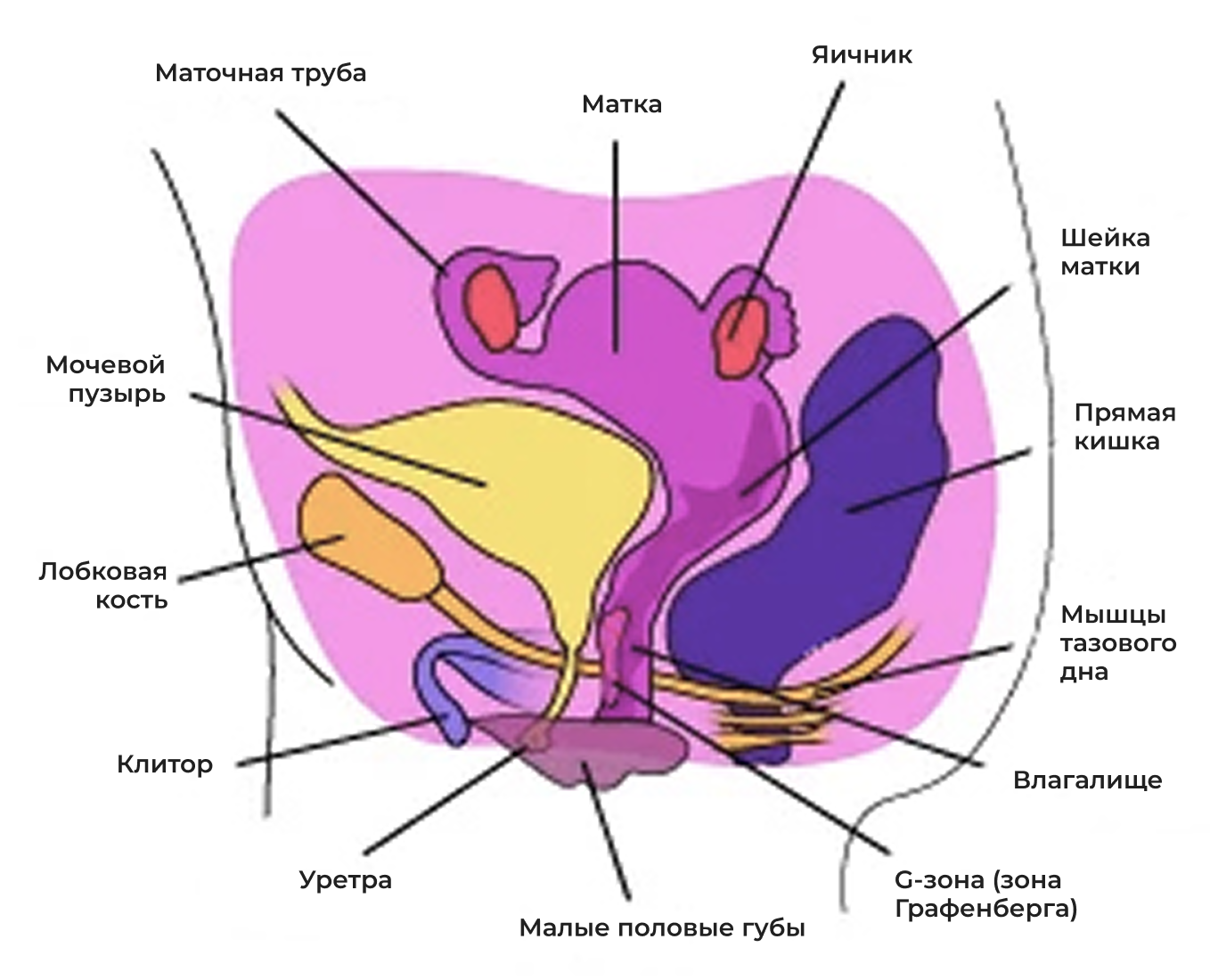
Cervix— is the lower part of the uterus, connected to the vaginal canal. During arousal the cervix is pulled up and the vaginal canal lengthens, which makes it possible to stimulate the front wall of the vagina. However, stimulating the cervix can be painful without sufficient arousal, so it is important to pay attention to preparation. The most sensitive area of the cervix is the back side, which becomes accessible only after full arousal.
Urethral sponge (also known as the G-spot) —although the urethral sponge is also called the "G-spot", it is in fact not a "spot" at all, but rather an area or zone. The urethral sponge is a section of spongy tissue that surrounds the urethra along its entire length. The sensitive area of the urethral sponge extends about 2–3 inches inward from the vaginal opening. The G-spot is similar to the prostate and generally responds well to deep massage and vibration.
Although the vagina itself does not contain a large number of nerve endings, it is surrounded by spongy erectile tissue. This tissue becomes more sensitive during arousal and responds well to massage and deep vibration.
Penis anatomy
It is a misconception that the anatomy of the penis, vulva and vagina is different. The overall structure and arrangement of the genitals are roughly the same in everyone. The penis is essentially an enlarged clitoris, made up of the base, shaft, glans and foreskin. In fact, during embryonic development the genitals form at weeks 8–12, and we all start from the same building blocks. The phallus develops into the clitoris or the penis depending on the presence of androgens (which are present only in male embryos). At this stage, the urogenital folds either fuse to form the scrotum or remain separate and form the labia minora.
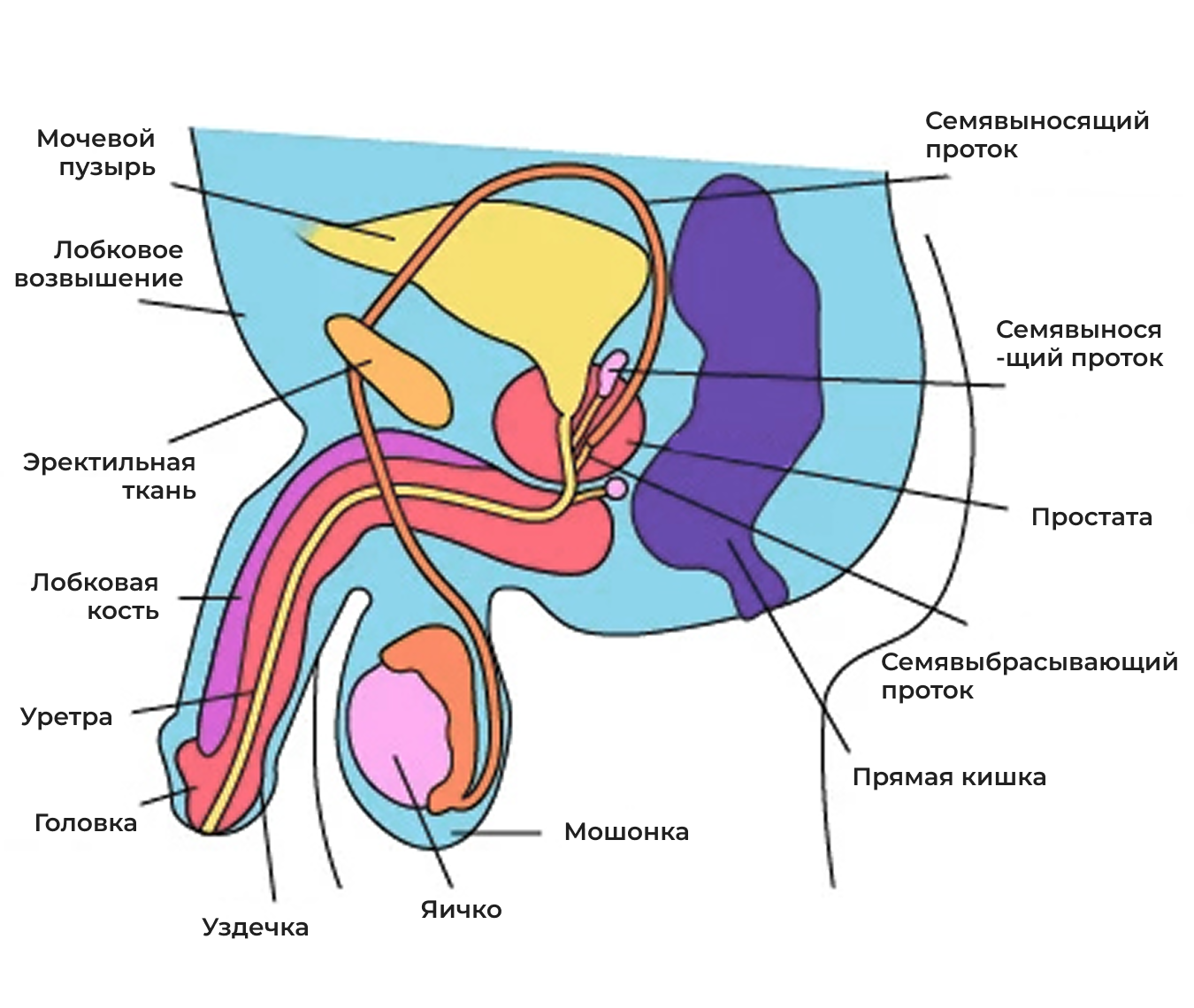
Glans of the penis — is the nerve-rich area at the tip of the shaft. Like the clitoris, the glans is covered by the foreskin if not circumcised.
Frenulum —is a V-shaped ridge located under the glans on the underside of the penis. The frenulum connects the foreskin to the glans and is the most sensitive part of the penis. A small piece of frenulum remains even on uncircumcised penises.
Whisk is the raised rim of the glans that protrudes from the shaft. On the underside of the glans is the densest concentration of nerve endings on the penis.
Foreskin (prepuce) — a loose fold of skin that covers the head of the penis and keeps its nerve endings in the head sensitive.
Perineum —the area between the scrotum and the anus. The perineum is made of erectile tissue covered with sensitive skin, which fills with blood and can be stimulated by perineal massage or vibration. Perineal massage can even lead to orgasm.
Mons pubis —a fatty fold covering the pubic bone, which also responds to deep massage and friction. The shaft of the penis lies inside the body, and you can stimulate its inner part through the pubic fold.
Penile shaft —is a long tubular structure that protrudes from the body and consists of erectile tissue. Inside, the shaft consists of the corpus spongiosum and the corpora cavernosa. The corpus spongiosum in the center prevents the urethra from closing during erection. The two corpora cavernosa on either side fill with blood during arousal. The pressure restricts blood flow, which makes the penis enlarge and become erect.
Urethra —a thin channel inside the penis that runs from the bladder to the tip of the penis. It also runs through the prostate, where the vas deferens receives sperm and the fluids that make up seminal fluid, which is expelled from the urethra during ejaculation.
Anatomy of the anal opening
Although some still consider it taboo, anal stimulation can bring a lot of pleasure, because the rectum and the tissues around the anus are very sensitive. Unlike the vagina, the rectum does not produce its own lubrication. Lubricant is essential for enjoying anal exploration.
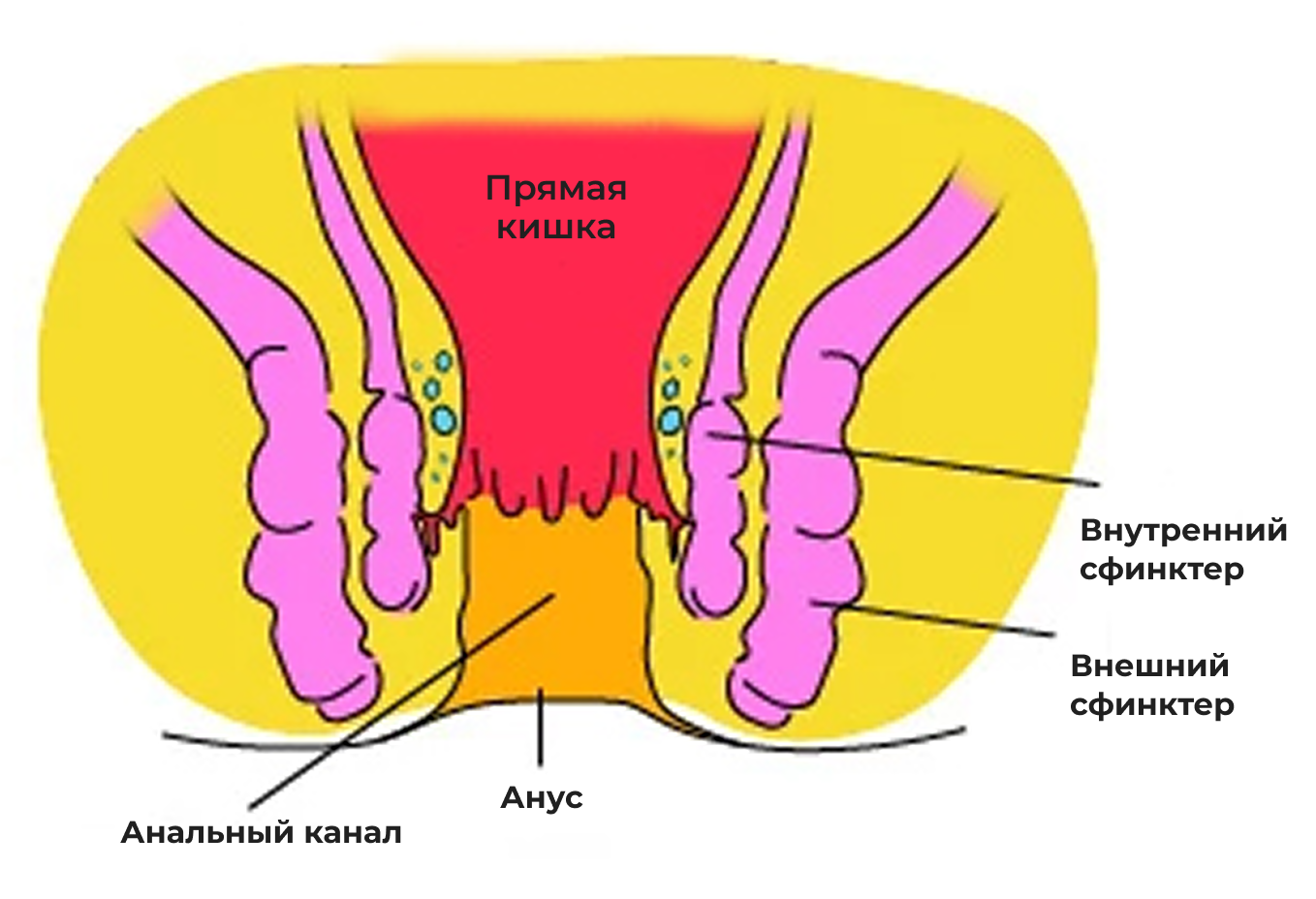
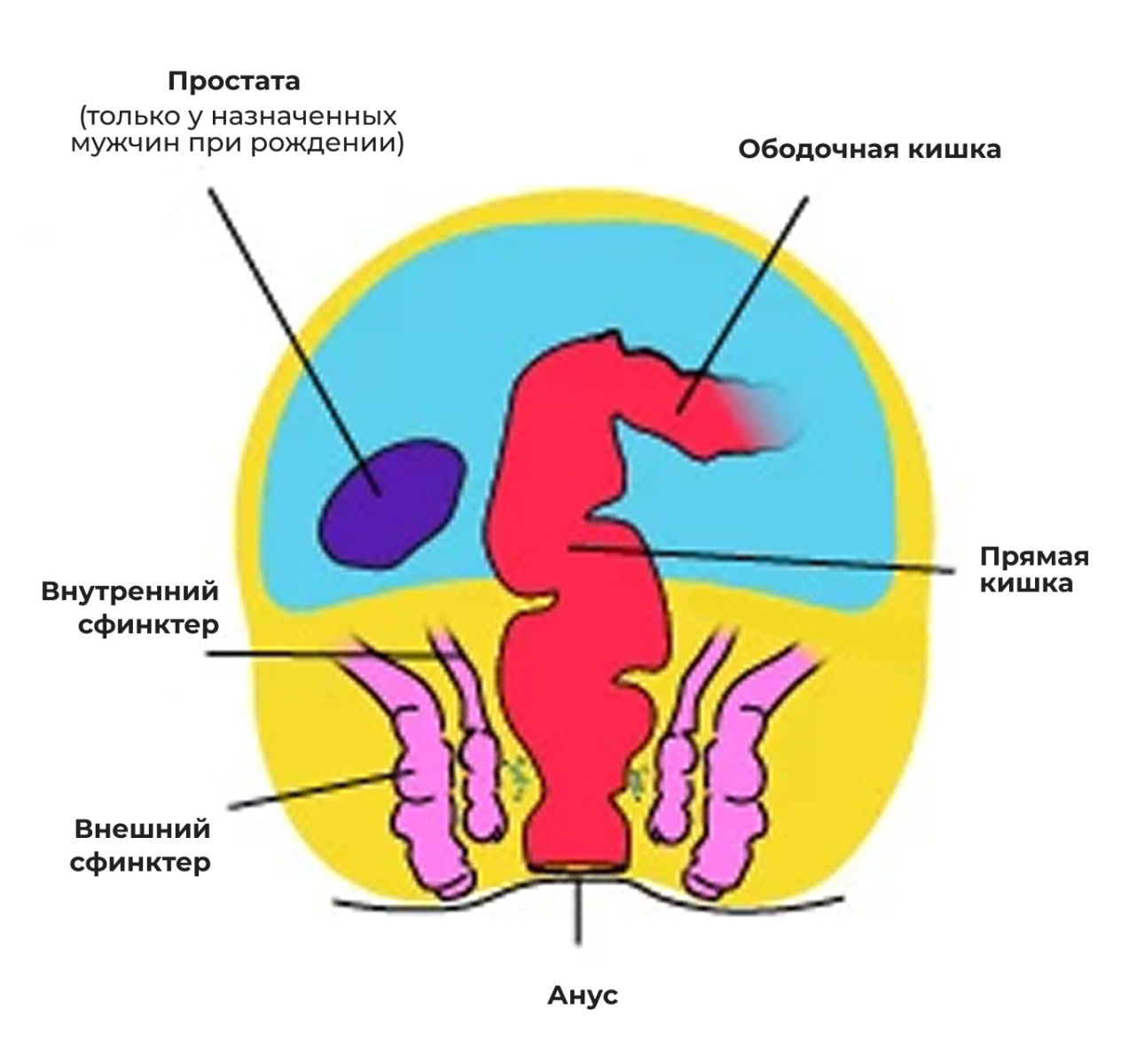
Anal sphincter —is a muscular ring with internal and external muscles that control the opening and closing of the anus. The sphincter can contract and relax involuntarily during arousal. Sphincter contractions can create suction, so during anal play it is necessary to use toys or objects with a base that keeps them from slipping into the rectum. Sphincters are also sensitive membranes made up of many nerve endings, which contribute to the pleasure or pain associated with anal play.
Anus —is the opening of the rectum and the exit of the digestive tract. The anus contains the second-highest concentration of nerve endings in the human body. It responds to external touch, vibration and licking. Penetration also stimulates the sensitive nerve endings in the anus, which extend about 2.5 cm into the body.
Prostate gland —is the gland that men have, which surrounds the urethra, produces seminal fluid and helps push sperm into the urethra. The prostate is surrounded by nerve endings and can be stimulated directly through anal penetration or indirectly through perineal massage.
Rectum — is part of the digestive system and is located between the sigmoid colon and the anus. Penetration of the rectum gives access to the prostate or the lower wall of the vagina.
It is important to note that, because of the large number of nerve endings in the anal area, anal sex can be either pleasurable or painful, depending on how you practice it. Before starting anal sex, it is important to know what you can and cannot do.
And last but not least: pelvic floor muscles —are the unsung heroes of orgasm, since they play a central role. The pelvic floor muscles run from the pubic bone to the tailbone and form part of the pelvic floor. They contract involuntarily during arousal. The strength and elasticity of the pelvic floor muscles are linked to the intensity and duration of orgasm.